Odd Fellows Roseville Lodge #203
From Word-of-Mouth to a Modern Community Website
Designed and developed the organization’s first website using WordPress, UX, content strategy, and SEO to improve visibility, make key information easier to find, and simplify the membership journey.
Case Study Navigation
Project Overview
Odd Fellows Roseville Lodge #203 is a local community organization that previously relied on word-of-mouth, social media, and in person communication to share information with members and prospective visitors. Without a dedicated website, it was difficult for people to learn about the organization, meeting schedules, upcoming events, or how to become a member.
This project focused on designing and developing the organization’s first website to establish an online presence, improve access to information, and create a clear path for prospective members to explore the lodge and its activities.
Using UX principles, WordPress, content strategy, and SEO best practices, I created a website that is welcoming, easy to navigate, and structured around the needs of prospective visitors while remaining simple for lodge members to update and maintain. View the live Roseville Odd Fellows website.
My Contributions
- UX Research
- Competitor Analysis
- Information Architecture Content Strategy
- WordPress Design & Development
- On-Page SEO
- Local SEO
- Analytics & Performance Analysis (GA4 & Search Console)
- Client Collaboration
Tools Used
- WordPress
- Kadence Blocks
- Figma
- All in One SEO
- Google Analytics 4 (GA4)
- Google Search Console
- Google Site Kit
- PageSpeed Insights
- Hostinger
Technologies
- HTML
- CSS
The Problem: Building a Website for an Organization Without an Online Presence
Roseville Odd Fellows Lodge #203 had served the local community for many years, but it had no official website. People interested in learning about the organization had to rely on word-of-mouth, social media, and in person conversations to find information about meetings, membership, and the lodge’s mission.
Without a central online presence, prospective members had no clear way to understand who the Odd Fellows are, what the organization does, how to become involved, or who to contact. The lodge needed a professional website that introduced the organization, explained the membership process, and made important information easy to find, while remaining simple for lodge members to update and maintain.
The Main Problems
- No official website or centralized source of information
- Limited visibility beyond word-of-mouth and social media
- Important information was spread across different communication channels
- Membership information was difficult for prospective members to find
- No clear path for visitors to learn about the lodge or contact members
Research & Discovery: Understanding the Organization’s Needs
Before designing the website, I met with the client to understand the lodge’s goals, target audience, existing communication methods, and long term needs. Since this would be the organization’s first website, the discovery process focused on understanding what prospective members needed to know, how existing members would use the site, and what information needed to be accessible online.
I also researched how prospective members search for local community organizations and reviewed similar lodge and community organization websites. The research revealed an important opportunity: many existing sites focused heavily on organizational history and current members, while offering limited guidance for prospective members, including FAQs, practical meeting information, and what visitors could expect.
Combined with the lodge’s existing information being spread across word-of-mouth, social media, and other materials, these findings reinforced the need for a centralized, visitor focused website with clear navigation and content designed around prospective member questions.
These insights shaped the website’s information architecture, navigation, content strategy, and later SEO decisions.
Research & Discovery Included
- Meeting with the client to understand the organization’s goals
- Gathering existing content, history, and membership information
- Researching how prospective members search for local organizations
- Identifying the information prospective members would expect to find
- Reviewing similar community organization and lodge websites
- Planning the core pages needed for launch
- Identifying missing content, photos, and historical information
Key Takeaway: The biggest opportunity wasn’t simply building a website, it was creating a clear, welcoming introduction for people unfamiliar with the organization. Prospective members first needed to understand who the Odd Fellows are, what the lodge does, what to expect, and how to become involved before they would consider attending a meeting or reaching out.
Information Architecture: Organizing Information Around Visitor Needs
After gathering requirements and completing the research phase, I organized the website around the questions prospective members were most likely to ask. Rather than structuring the website around the organization’s internal operations, I focused on making it easy for visitors to understand who the Odd Fellows are, how to join, where to find meeting information, and how to get in touch.
The information architecture and navigation were designed to create a clear path from learning about the organization to becoming involved. Each page was given a distinct purpose, helping visitors quickly find the information they needed while supporting the overall membership journey.
The Website Structure Focused On
- Introducing the organization and its mission
- Explaining the membership process
- Providing meeting and contact information
- Highlighting community involvement and events
- Creating clear calls to action throughout the website
Sitemap Overview
The sitemap below shows how these priorities were translated into a simple, visitor focused navigation structure. The core pages: About, Join, Events, and Contact, give visitors direct access to the information they are most likely to need when learning about the lodge.
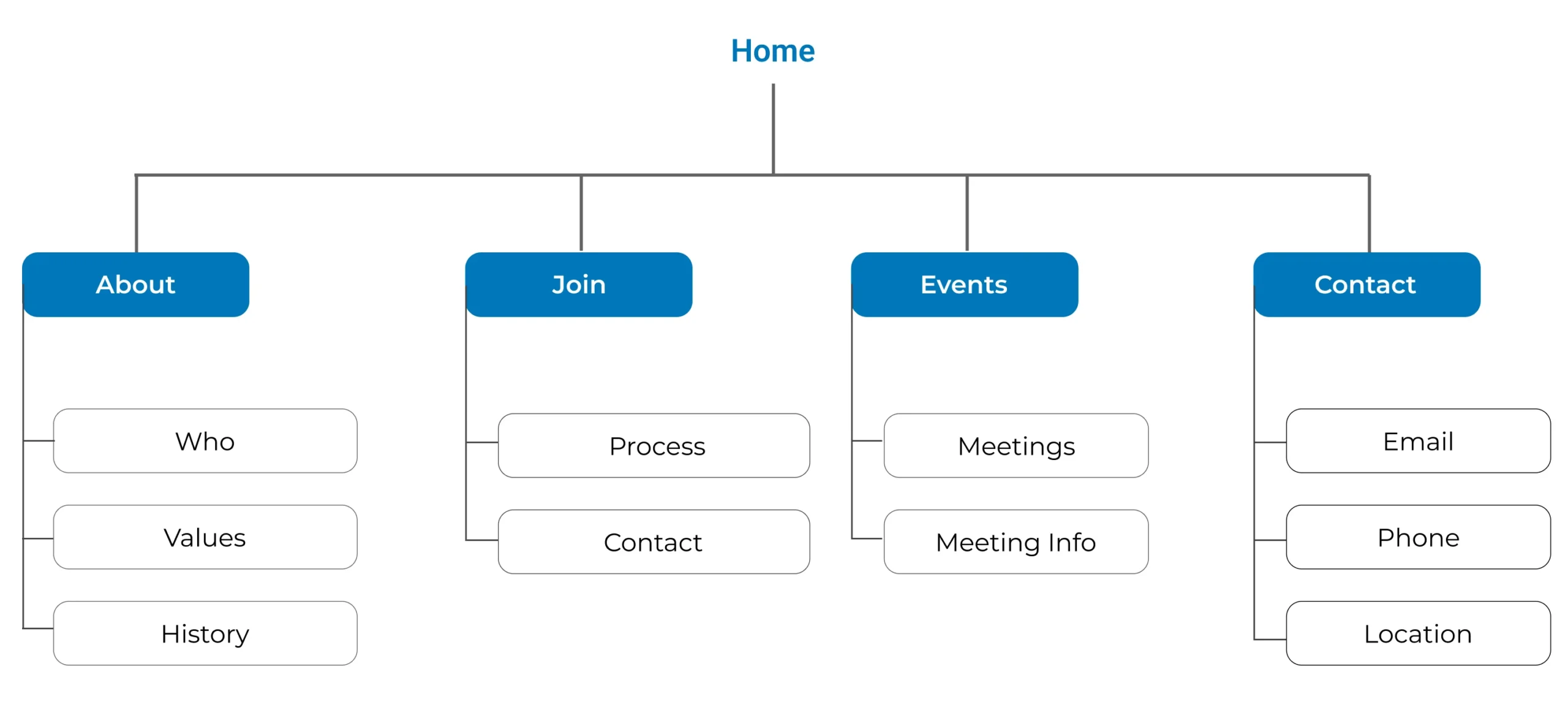
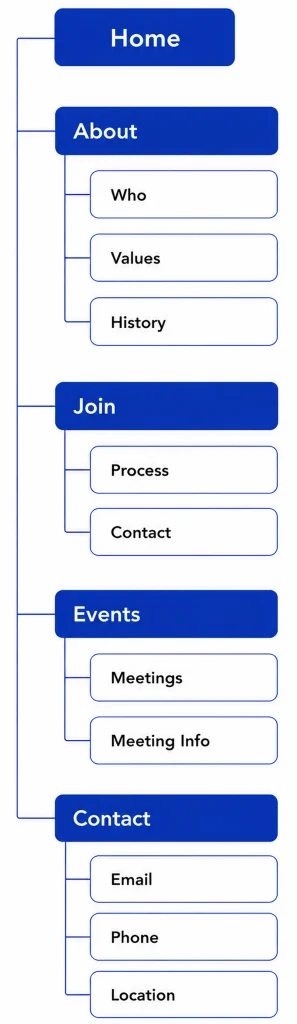
Key Takeaway: Organizing the website around visitor questions rather than the organization’s internal structure created a navigation system that made it easier for prospective members to find information, understand the organization, and confidently take the next step.
SEO Strategy & Content Planning
Before designing the website, I completed SERP analysis, keyword research, competitor research, and search intent analysis to understand how prospective members search for Odd Fellows organizations and what information they expect to find.
Reviewing search results and competitor websites revealed common navigation patterns, page topics, and content gaps. Many existing sites emphasized organizational history and information for current members, while providing less guidance for prospective members and first time visitors. This created an opportunity to develop content that was more visitor focused, practical, and easier to navigate.
The research also guided decisions about page titles, heading hierarchy, navigation, metadata, and content organization, ensuring the website aligned with both user needs and SEO best practices.
I created an SEO keyword strategy for each core page, mapping target keywords and search intent to specific content goals. The research identified the Join page as a priority opportunity, aligning search demand with one of the lodge’s primary goals: helping prospective members understand how to become involved.
SEO Strategy Included
- SERP analysis
- Keyword research
- Search intent analysis
- Competitor website review
- SEO keyword strategy
- Page title and metadata planning
- Heading hierarchy
- Content planning aligned with search intent
From Keyword Research to Page Strategy
The comparison below illustrates how keyword research influenced page purpose, content strategy, and navigation decisions across the website.
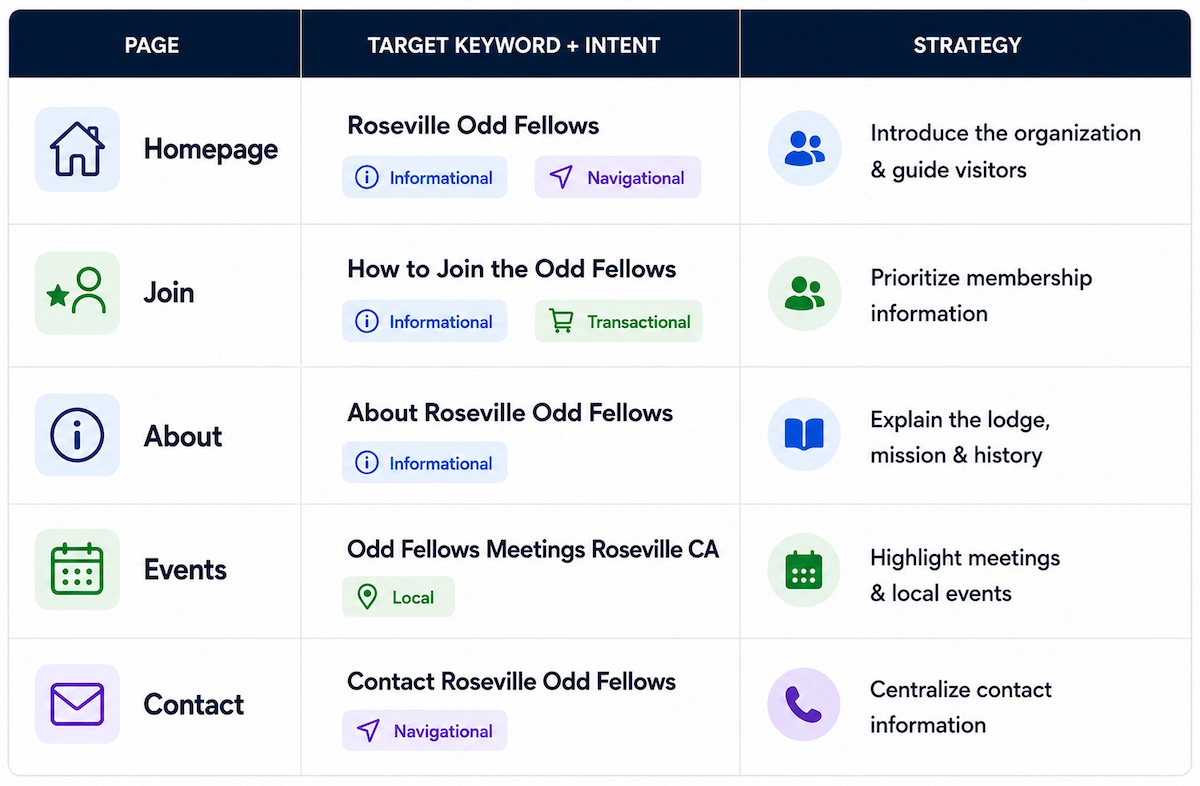
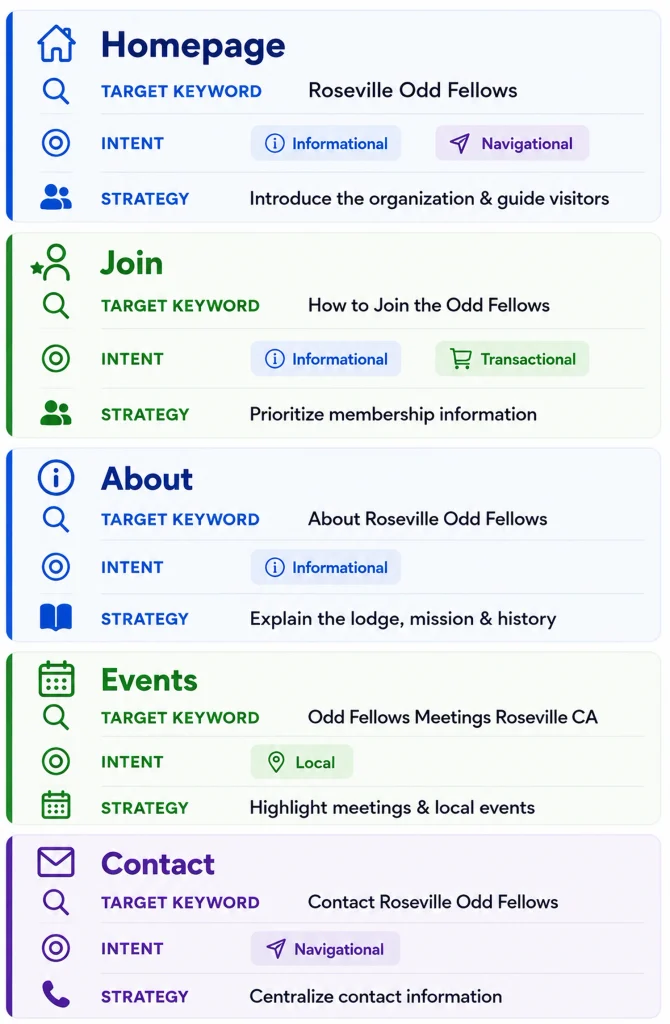
Key Takeaway: Keyword research influenced more than on-page SEO. It helped determine which pages to prioritize, what information each page should provide, and how content should support the visitor journey. The Join page emerged as an important opportunity because it connected relevant search behavior with the organization’s goal of making membership information easier to find.
Design Solution: Building the Organization’s First Website
With the research, information architecture, and SEO strategy established, I designed and developed a responsive WordPress website that introduced visitors to the organization while making important information easy to find. Each page was designed with a clear purpose, guiding visitors from learning about the Odd Fellows to understanding membership and connecting with the lodge.
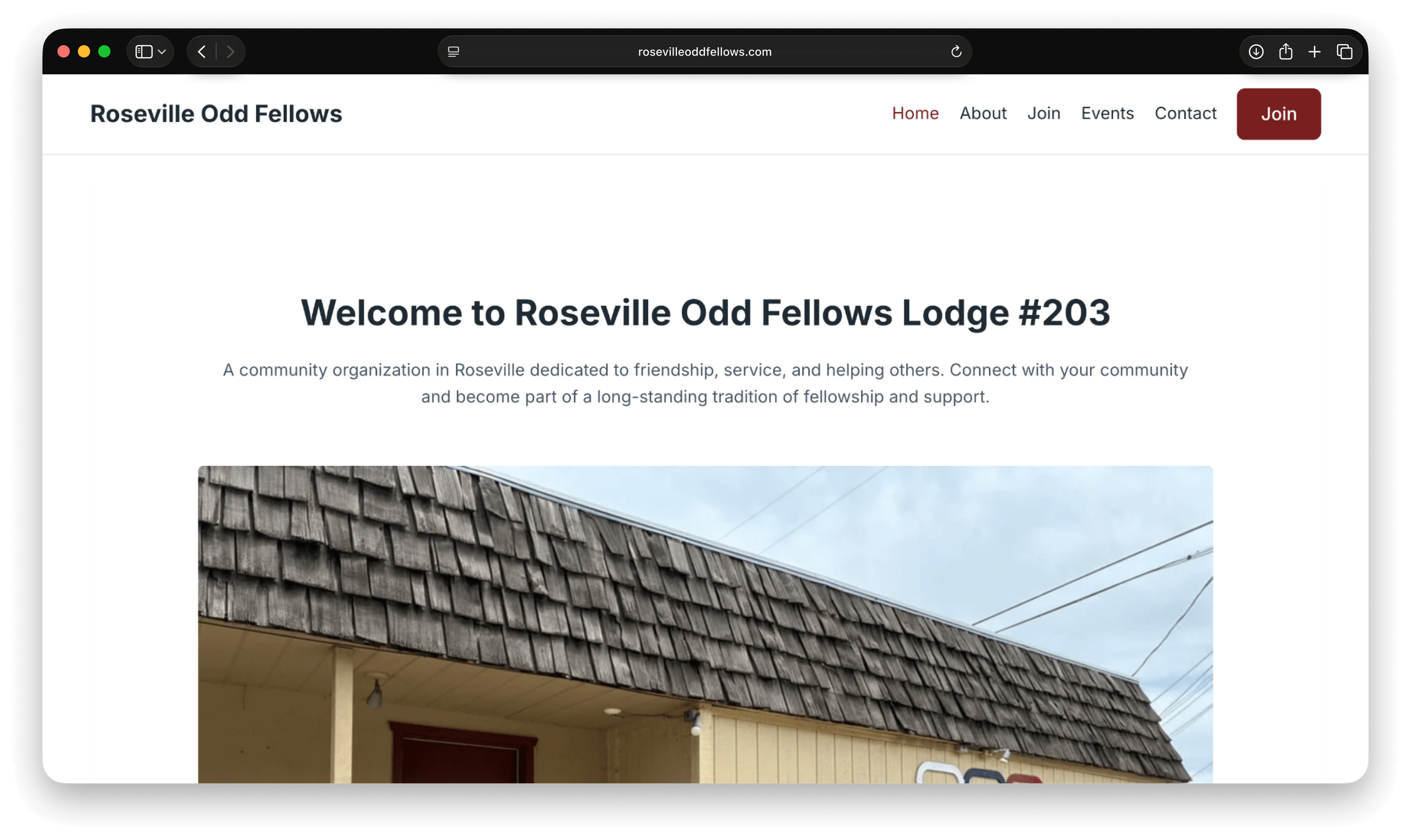
The homepage serves as the primary entry point, introducing the organization and directing visitors toward key actions. Supporting pages provide information about the lodge, membership, meetings, events, and ways to get in touch.
Throughout the website, I focused on clear navigation, visual hierarchy, consistent design patterns, and responsive layouts to create a welcoming and easy to use experience. Reusable design patterns also made the website easier for the organization to maintain and expand over time.
Solution Highlights
- Designed and developed the organization’s first website in WordPress
- Created a responsive experience across desktop, tablet, and mobile devices
- Developed a clear navigation structure to improve usability
- Designed dedicated pages for About, Join, Events, and Contact
- Incorporated consistent calls to action throughout the website
- Applied a consistent design system across the entire website
Key Design Decisions
The following examples highlight several of the design decisions that improved usability, created a consistent experience, and supported the organization’s goal of welcoming prospective members.
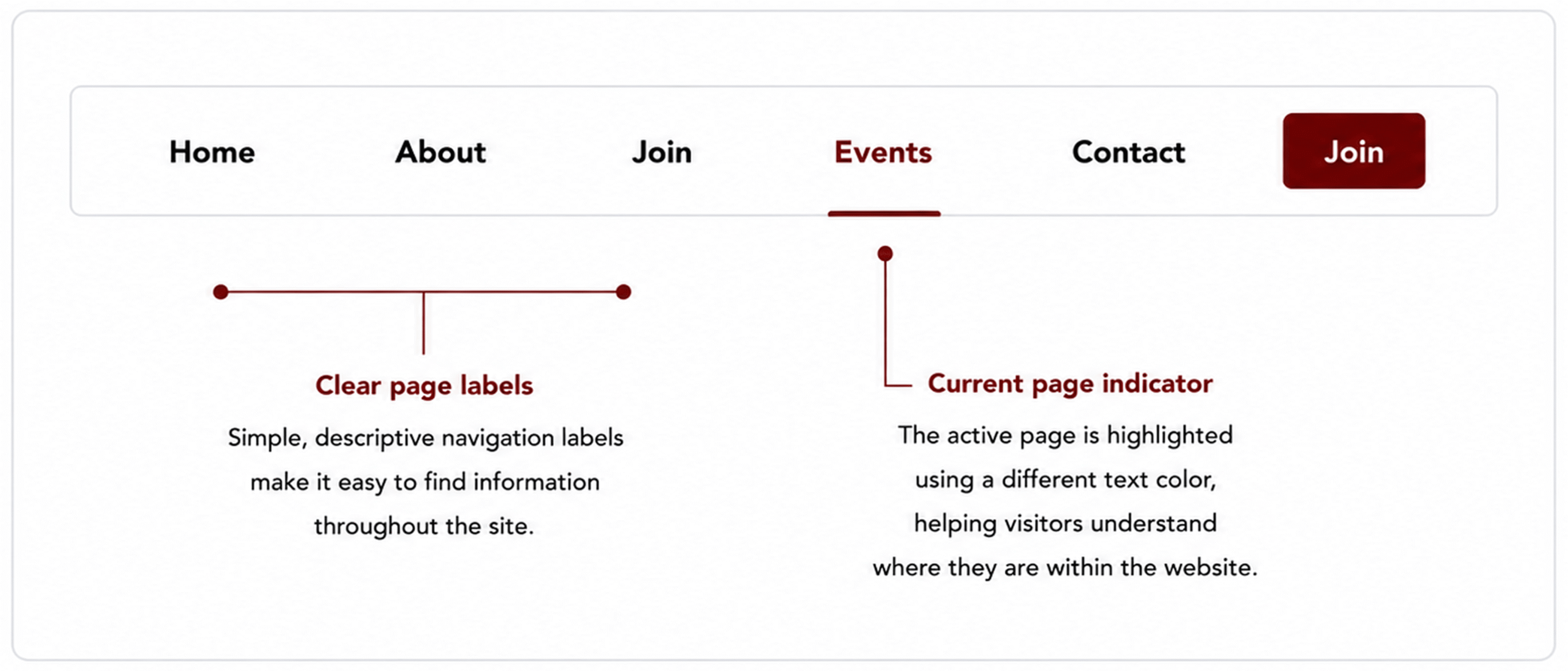
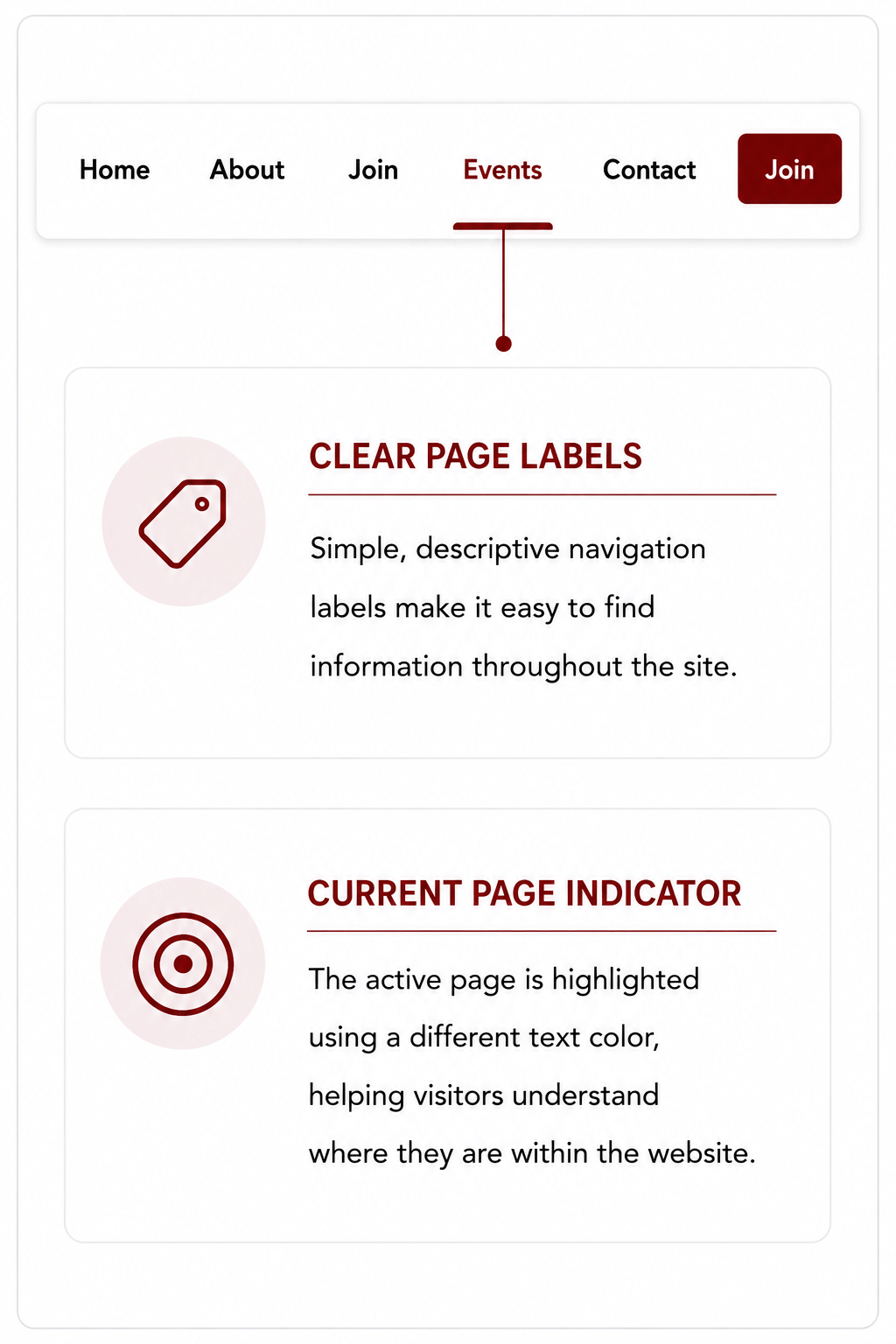
Clear Navigation
Rather than organizing the website around the organization’s internal structure, I designed the navigation around the questions prospective members were most likely to ask. Clear page labels, an active page indicator, and a prominent call to action help visitors quickly understand where they are and how to continue exploring the site.
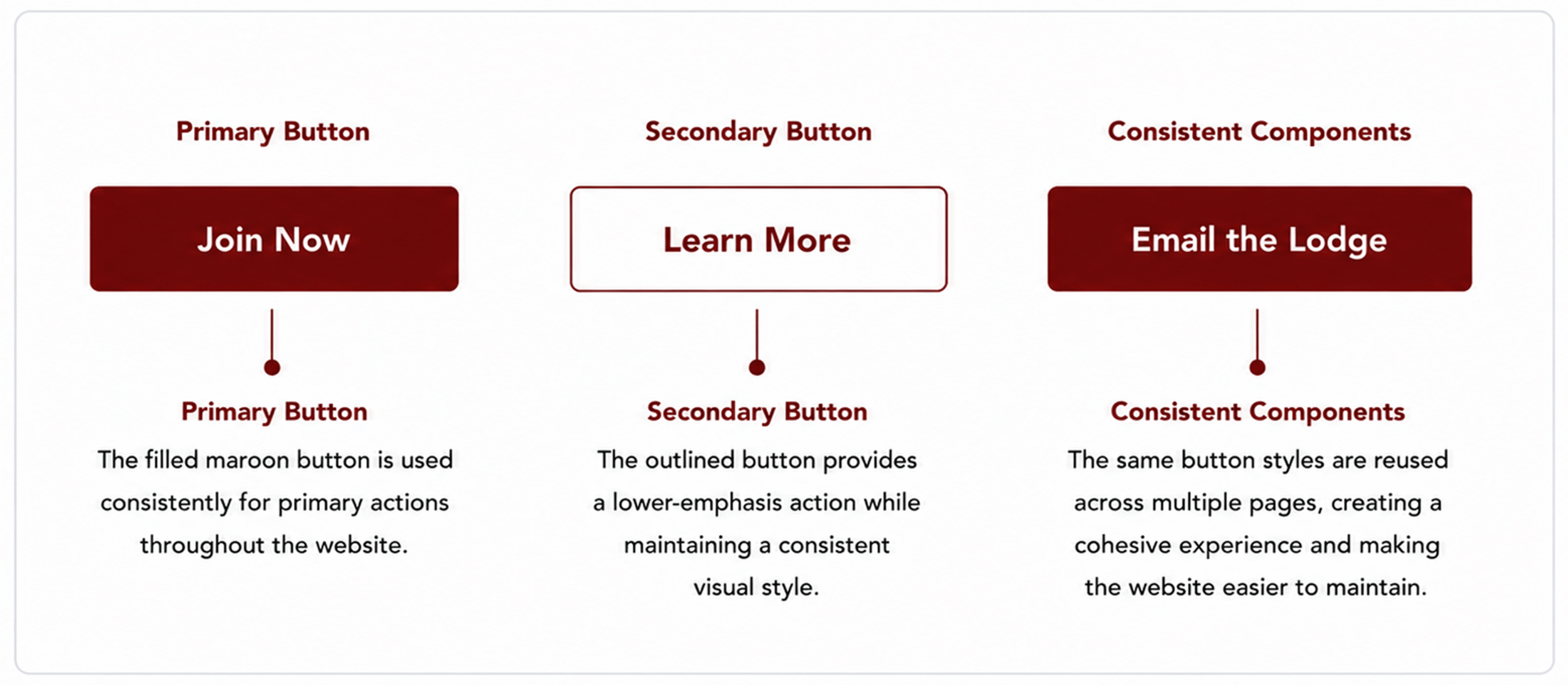
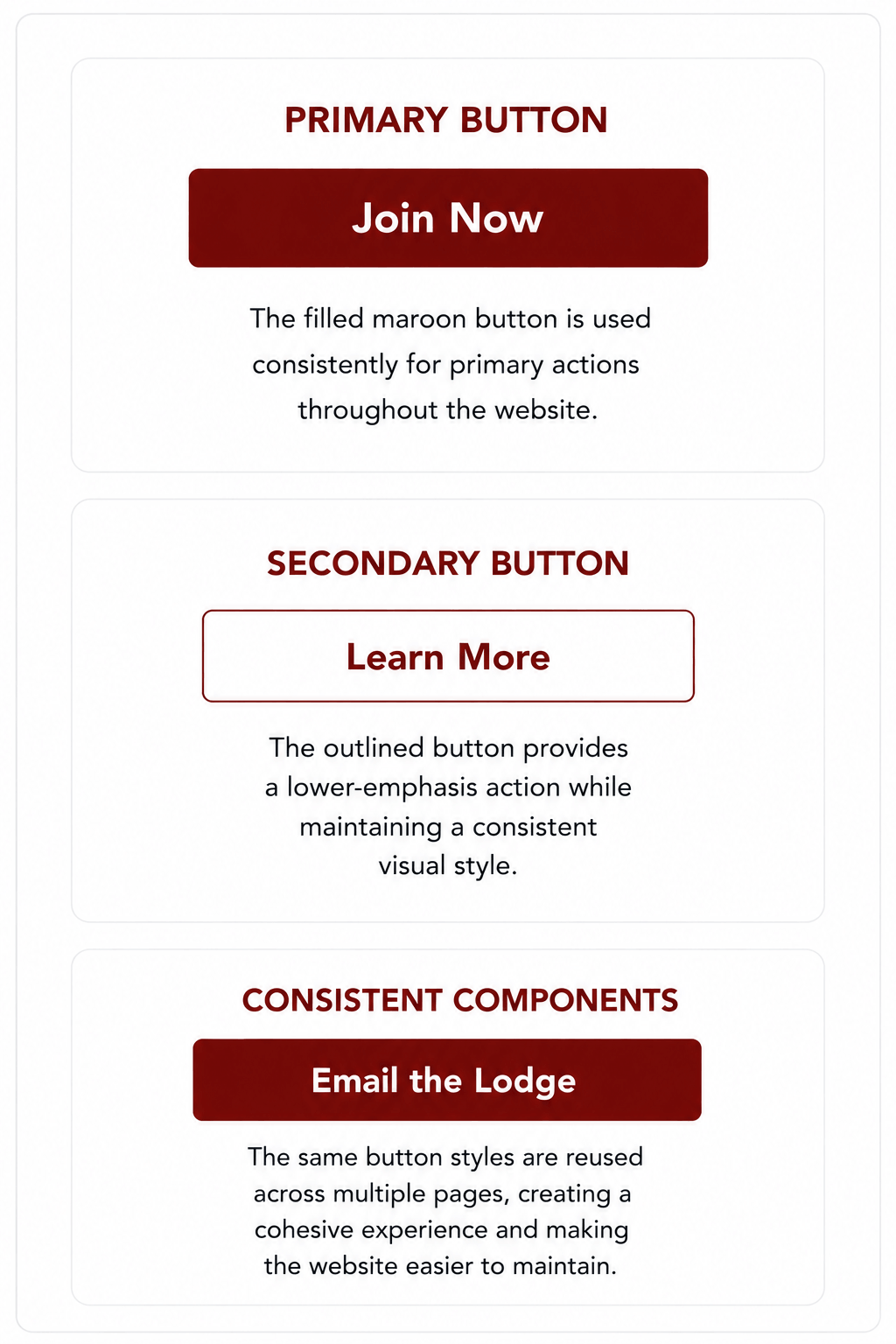
Consistent Design System
Reusable buttons and interface components create a consistent visual experience across the website while making future updates easier. Repeating these design patterns improves usability by helping visitors recognize important actions regardless of which page they are viewing.
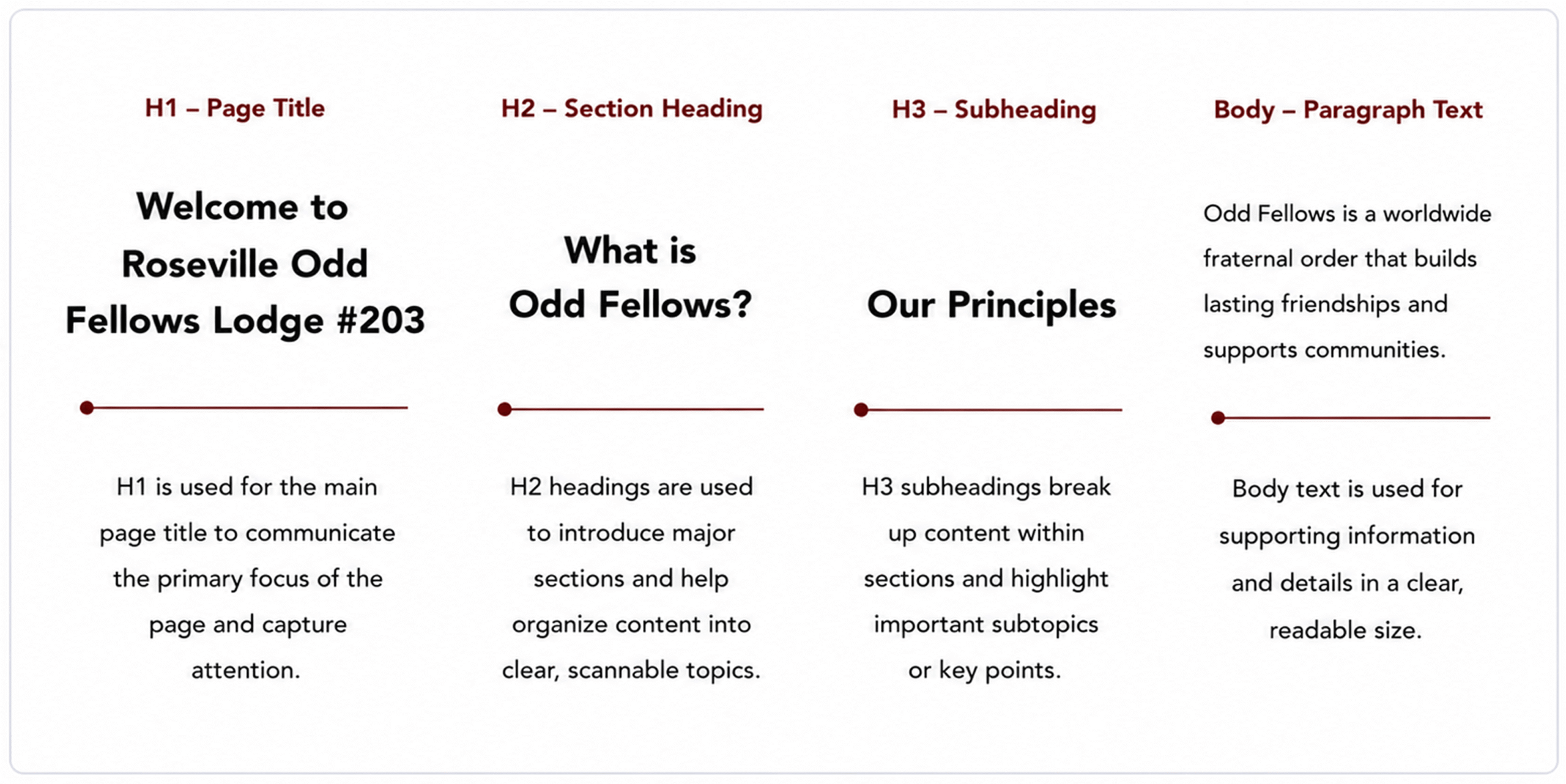
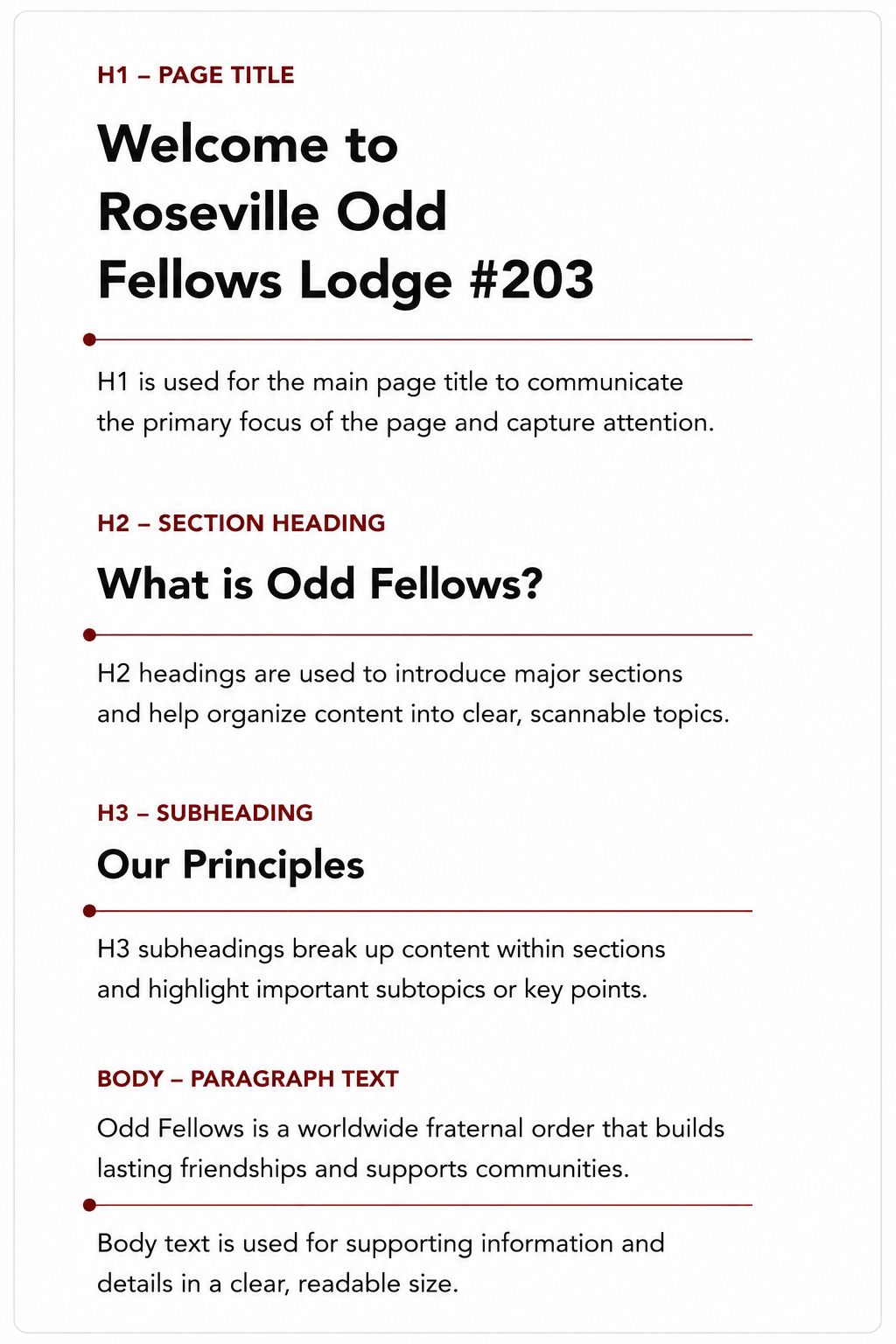
Visual Hierarchy
Typography, spacing, and heading levels establish a clear visual hierarchy that guides visitors through each page. Organizing information with consistent headings and supporting text improves readability and helps users scan content more efficiently.
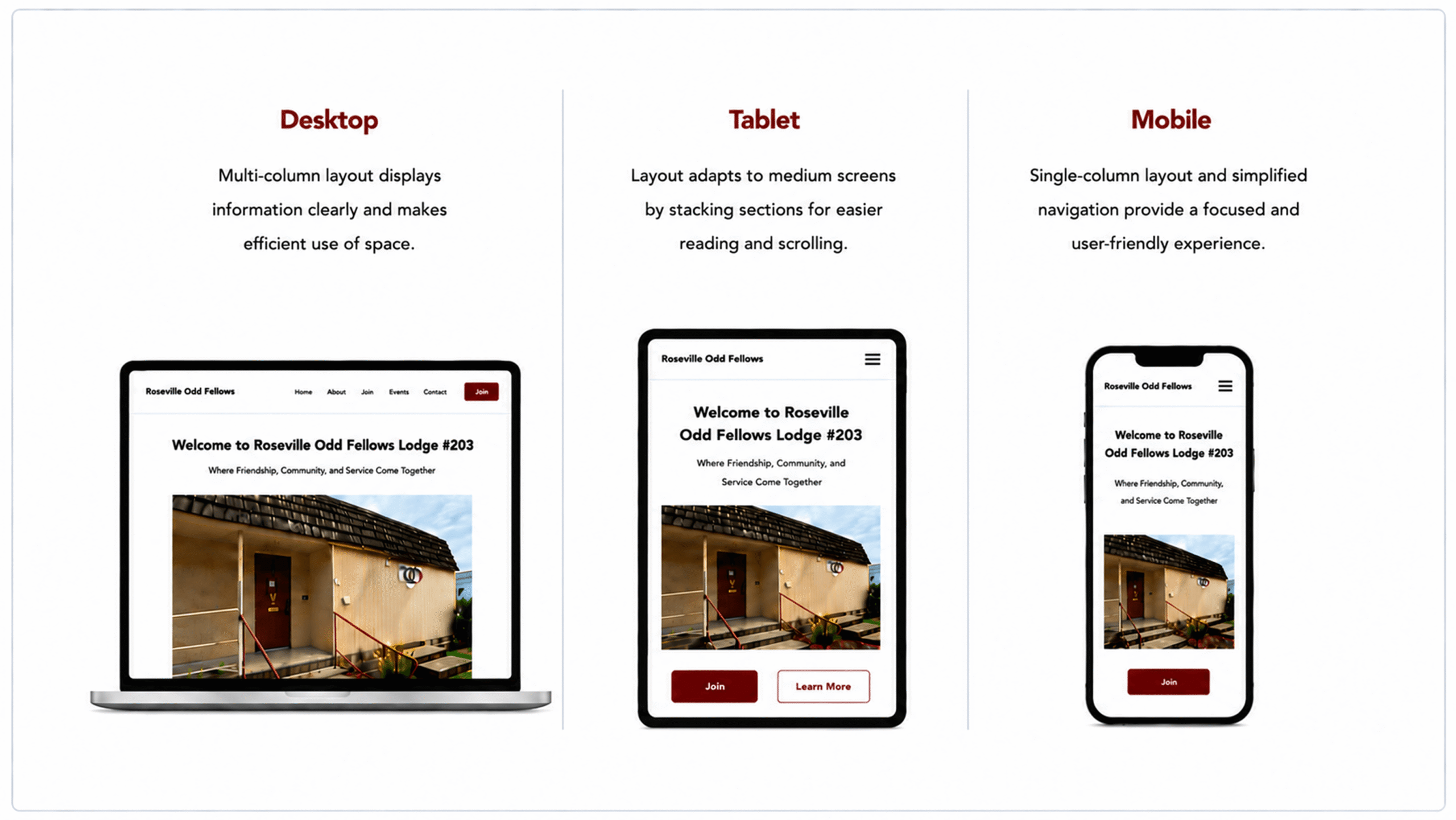
Responsive Layout
The website was designed using responsive layouts that adapt seamlessly across desktop, tablet, and mobile devices. Regardless of screen size, visitors can easily navigate the site, read content, and complete important actions without sacrificing usability.
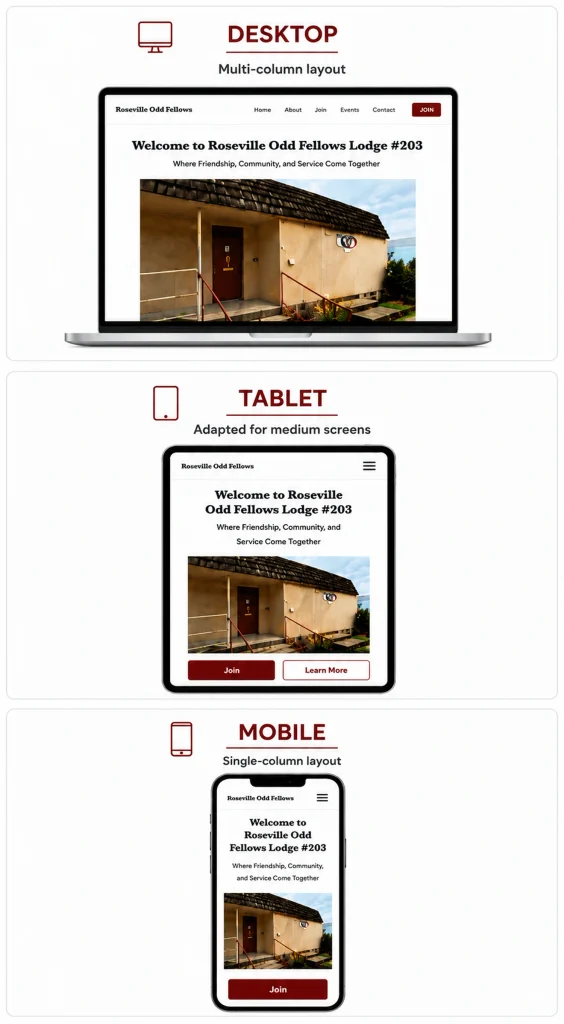
Key Takeaway: Every design decision supported a specific usability goal. Clear navigation, consistent components, visual hierarchy, and responsive layouts worked together to help prospective members find information, understand the organization, and confidently take the next step.
Final Website
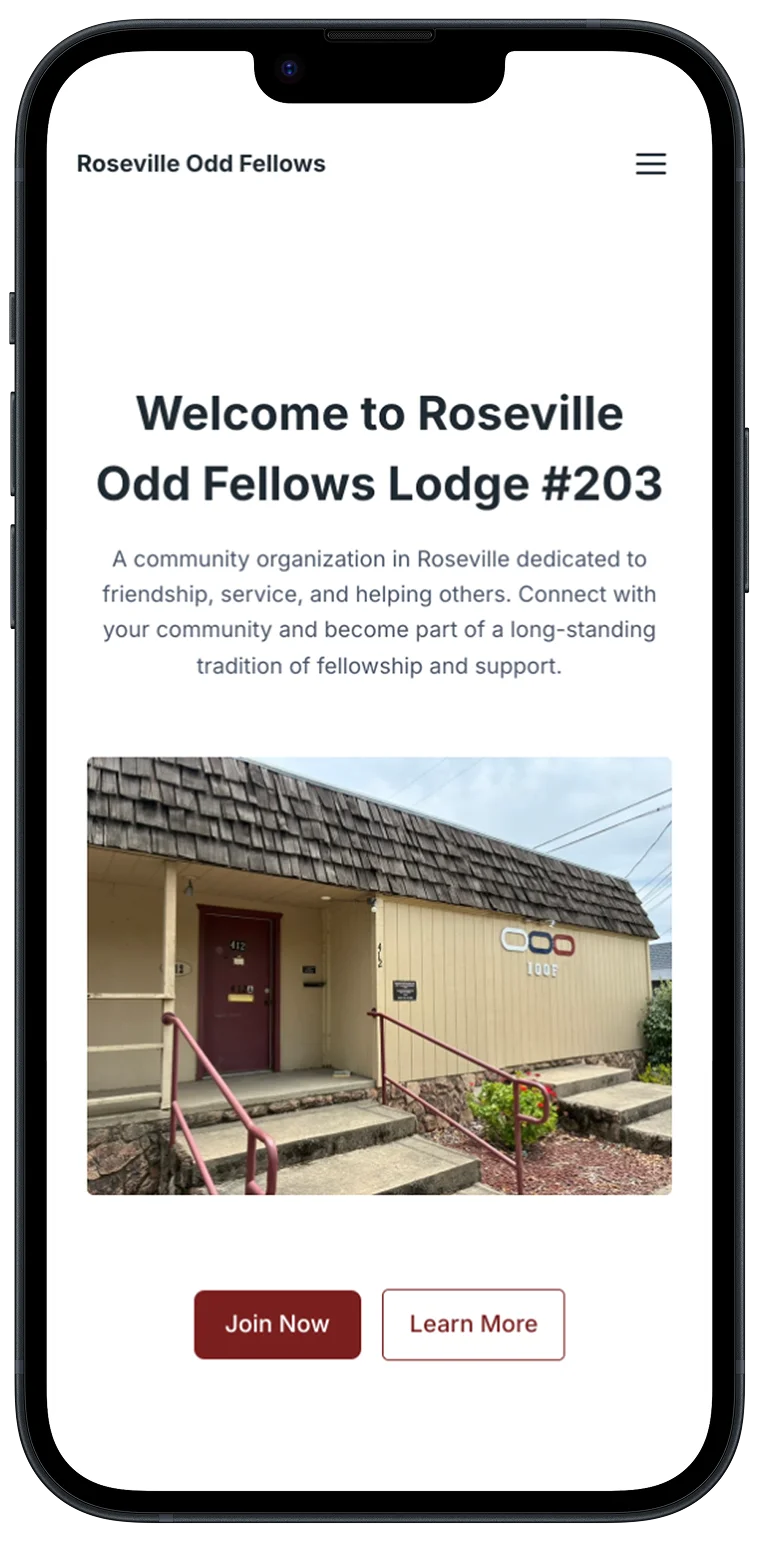
The completed website brought together UX research, information architecture, SEO strategy, and responsive WordPress development into a cohesive online experience that introduced visitors to the organization while making important information easy to find.
Built in WordPress using Kadence Blocks, the website provides clear pathways for visitors to learn about the Roseville Odd Fellows, understand the membership process, explore upcoming events, and contact the lodge. Each page was designed to support both visitor needs and the organization’s long term goals.
As the lodge’s first professional website, it established a centralized online presence while creating a scalable foundation for future content, events, photography, and community updates. The result is a website that is welcoming, easy to maintain, and accessible across devices.
Website Launch: SEO & Technical Implementation
Launching the website involved more than publishing a WordPress site. To establish the organization’s first online presence, I implemented the technical foundation for search visibility, performance, analytics, and long term management.
Using the SEO strategy developed during the planning phase, I optimized page titles, heading hierarchy, metadata, and content structure across the website. I also configured All in One SEO and connected Google Analytics 4, Google Search Console, and Google Site Kit to establish a foundation for measuring website traffic and search performance after launch.
After launch, I monitored indexing through Google Search Console. When several pages were not indexed automatically, I submitted them for indexing to help Google discover the site’s content.
Before publishing, I completed responsive testing, image optimization, professional email configuration, and a final usability review to ensure visitors could access important information across desktop, tablet, and mobile devices.
Launch Activities
- Implemented on-page SEO recommendations
- Configured All in One SEO
- Connected Google Analytics 4
- Connected Google Search Console
- Configured Google Site Kit
- Verified indexing and submitted pages to Google
- Set up professional email forwarding
- Tested responsive layouts across desktop, tablet, and mobile devices
- Optimized images and prepared the website for launch
Post-Launch Performance: Early Search & Engagement Trends
Following launch, I monitored the website using Google Search Console and Google Analytics 4 to evaluate search visibility, traffic, and visitor engagement. June established the site’s first full post launch baseline, while July through September provided additional data to evaluate month-over-month performance and emerging search patterns.
The first four months showed encouraging early progress while also showing month-to-month fluctuations as the site began establishing search visibility.
Search Visibility
Google Search Console showed a clear increase in search activity between June and July. In June, the website generated only 5 impressions and no clicks. By July, it generated 39 impressions and 6 clicks, while additional pages began appearing in search results.
The homepage remained the site’s strongest search page, increasing from 5 impressions in June to 28 in July and generating 5 clicks. The Join, Events, About, and Contact pages also appeared in search results, showing that Google was beginning to discover and surface content across the website.
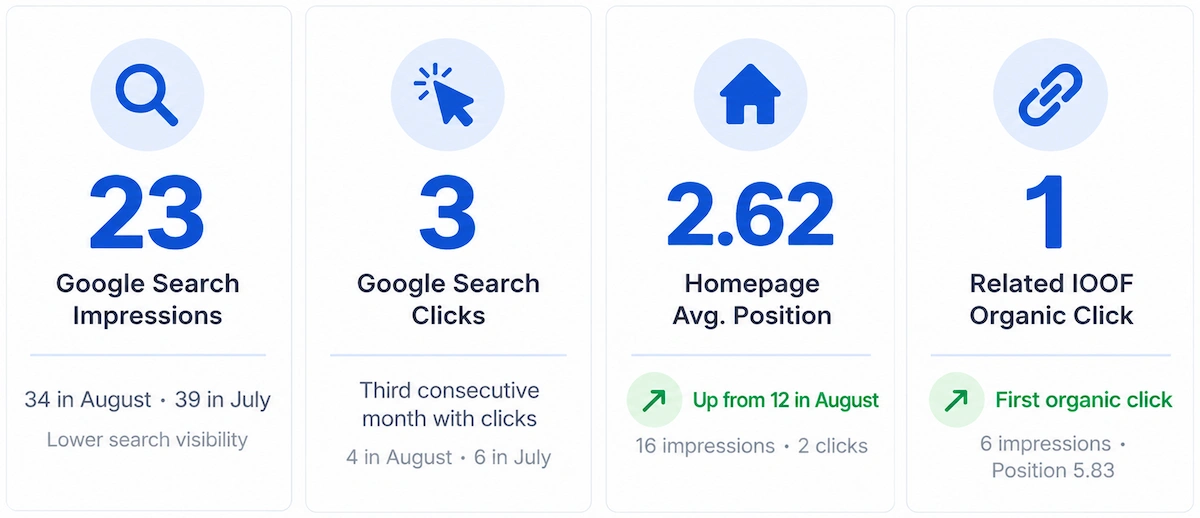
In August, the website generated 34 impressions and 4 clicks, followed by 23 impressions and 3 clicks in September. Although overall search visibility declined, September showed stronger ranking performance, with average position improving from 40.1 in August to approximately 24.9 in September.
Several individual pages also showed stronger rankings. The homepage maintained relatively stable visibility at 16 impressions and improved from an average position of 12 in August to 2.62 in September, generating 2 clicks. The Related IOOF page increased from 1 impression in August to 6 in September, averaged position 5.83, and generated its first organic click.
Mobile search performance also continued to outperform desktop. In September, mobile averaged position 4.25 and generated all 3 search clicks, continuing a pattern observed across July, August, and September.
Because September generated only 23 total impressions, I treated these ranking improvements as encouraging early signals rather than established trends and continued monitoring performance before making major SEO changes.
Search Console Highlights
Early Visitor Engagement
Google Analytics 4 provided additional insight into how visitors interacted with the website after launch. In July, Organic Search generated 7 sessions and 6 engaged sessions, resulting in an 85.7% engagement rate and an average engagement time of 130 seconds per session.
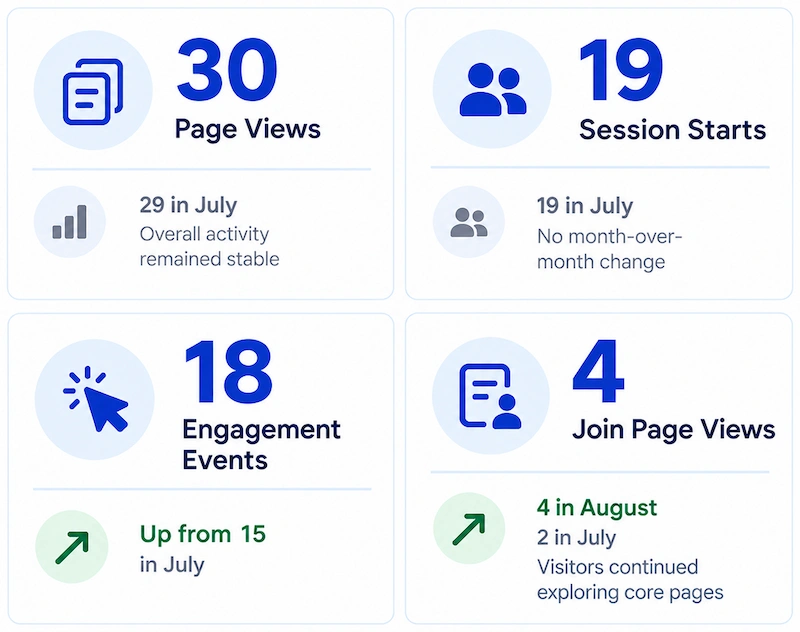
Visitor behavior also expanded beyond the homepage. While June activity was concentrated primarily on the homepage, July and August recorded views across the About, Join, Events, and Contact pages, providing early evidence that visitors were beginning to explore the site’s core content.
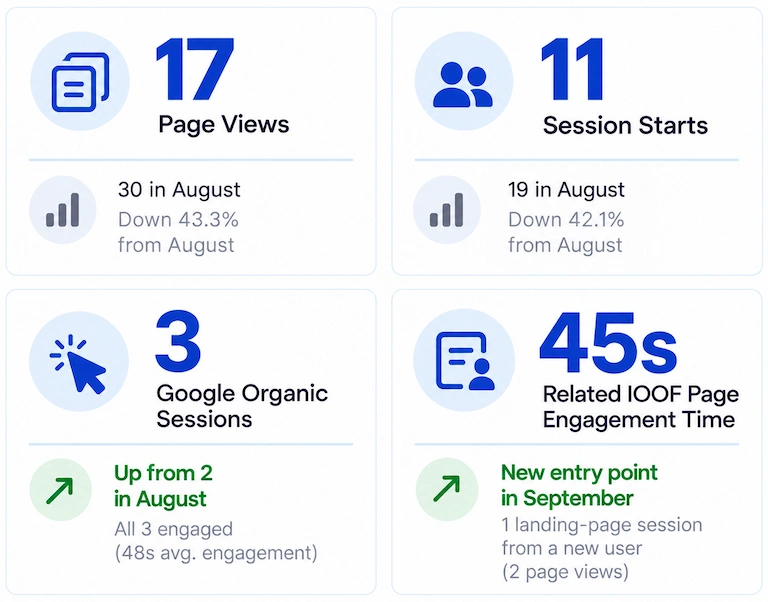
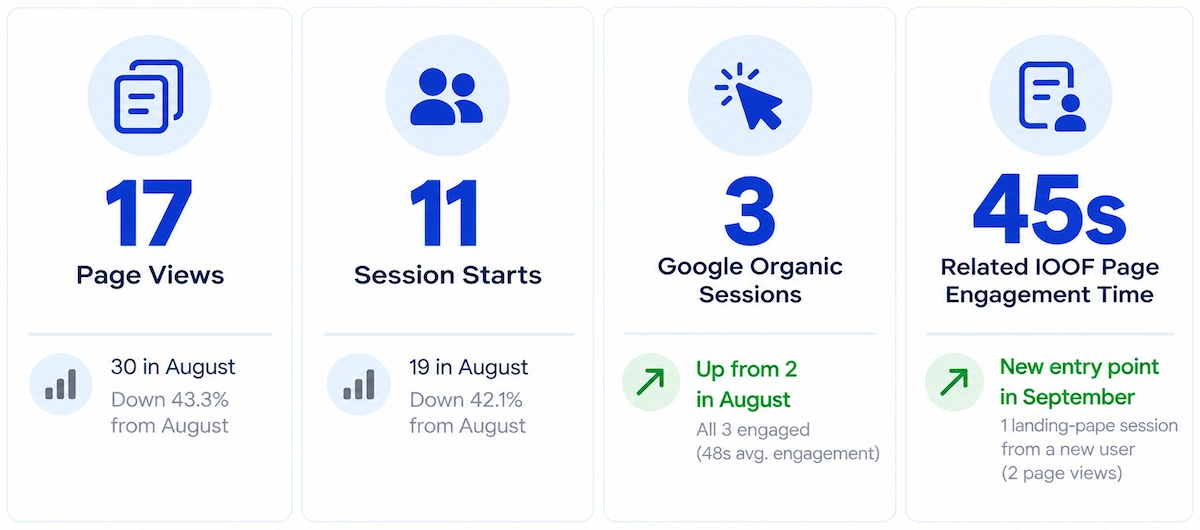
September brought lower overall website activity. Page views decreased from 30 in August to 17, while session starts decreased from 19 to 11. However, Organic Search increased slightly from 2 sessions to 3, and all three September organic sessions came from Google and were engaged, averaging 48 seconds of engagement time per session.
The Related IOOF page also emerged as a new entry point, generating 1 landing-page session from a new user, 2 page views, and 45 seconds of average engagement time. This aligned with its increased visibility and first organic click in Search Console.
Mobile visitors continued to show stronger engagement than desktop visitors. In September, mobile generated a 100% engagement rate and 36 seconds of average engagement time per active user, compared with 71.43% and 3.67 seconds on desktop. Because device level traffic remains small, I continued monitoring this pattern rather than making device specific UX changes.
Analytics Highlights
Emerging AI Referral Traffic
August also revealed a new acquisition source: the website’s first identified referral from ChatGPT. GA4 recorded 1 engaged session from chatgpt.com / ai-assistant, with the visitor landing directly on the Events page and recording 28 seconds of average engagement time.
No additional AI-assistant referrals were identified in September. Because the August referral represented only one session, I treated it as an early signal rather than an established traffic source and continued monitoring AI referred traffic as part of the site’s ongoing analytics reporting.
Key Takeaway: Four months of post launch data show that the website has progressed from initial search discovery to generating recurring organic clicks and visibility across multiple pages. September brought lower overall search and website activity, but stronger average rankings and several encouraging page level signals, including the Related IOOF page’s first organic click and engaged visit. With traffic still limited, I continued monitoring these patterns rather than making major optimization decisions based on short term fluctuations.
Client Feedback & Ongoing Partnership
“We’re very happy with how the website turned out.”
Following the website launch, the client shared that they were very happy with the completed website and expressed interest in continuing to work together as the organization’s online presence grows.
The project has since evolved into an ongoing partnership, with additional needs and opportunities emerging after launch. Post-launch work has included adding a dedicated page for a related Odd Fellows organization that shares the meeting location and developing a visitor-focused content strategy. Future opportunities include expanding the photo gallery, enhancing the Events page, and exploring an online GED Grant application workflow.
The content strategy builds on opportunities identified through competitor research, SERP analysis, search behavior, and post-launch analytics. The first article, “What Happens at an Odd Fellows Meeting?”, was developed using this research alongside firsthand information from lodge members and is currently undergoing client review before publication. Future content will continue addressing practical questions prospective visitors may have about membership, meetings, community involvement, and the Odd Fellows organization.
I will also continue monitoring Google Search Console and Google Analytics 4 to evaluate search visibility, visitor behavior, content performance, and emerging opportunities as the website grows.
Reflection & Lessons Learned
Working directly with a client gave me valuable experience balancing user needs, organizational goals, SEO strategy, and WordPress development within a real world project. Because this was the organization’s first website, decisions ranging from information architecture and content strategy to technical implementation helped establish the foundation for its online presence.
The project reinforced the importance of research and planning before design and development. Competitor and search research helped identify opportunities to make the website more useful for prospective members, while post launch analytics provided a way to evaluate how visitors were actually discovering and using the site.
It also demonstrated that launching a website is only the beginning. Client needs continue to evolve, search behavior reveals new content opportunities, and performance data provides insights that were not available during the initial design process.
Final Takeaway: This project strengthened my experience managing the full lifecycle of a live client website, from research, strategy, and design through WordPress development, SEO implementation, launch, analytics, and ongoing optimization while showing how continuous collaboration and real performance data can guide a website’s growth over time. View the live Roseville Odd Fellows website.
Explore More Work
PREVIOUS PROJECT
NEXT PROJECT